Healthy Metabolism
Balanced Lifestyle
The first step in protecting your thyroid is raising awareness. Paying attention to the subtle signals your body sends, getting regular checkups, and accessing accurate information can make a big difference in leading a healthy life.
Protect Your Thyroid
The thyroid gland is a small but extremely important organ located at the front of our neck. 🩺 This butterfly-shaped gland affects our metabolism, energy levels, weight balance, mood, and even our heart rate through the hormones it secretes. In other words, thyroid health is much more closely linked to our quality of life than we realize.

Protect Your Thyroid
Remember: With the right information, early diagnosis, and appropriate treatment, it is possible to maintain your thyroid health.
The first step in protecting your thyroid is raising awareness. Paying attention to the subtle signals your body sends, getting regular checkups, and accessing accurate information can make a big difference in leading a healthy life.
Our goal on this platform is to explain thyroid diseases in language that everyone can understand, to alleviate fears, and to provide reliable information about current treatment options.

Non-Surgical Treatment
Thyroid nodules do not always require surgery.
For suitable patients, there are modern treatment options aimed at preserving thyroid tissue.

A Scientific and Contemporary Approach
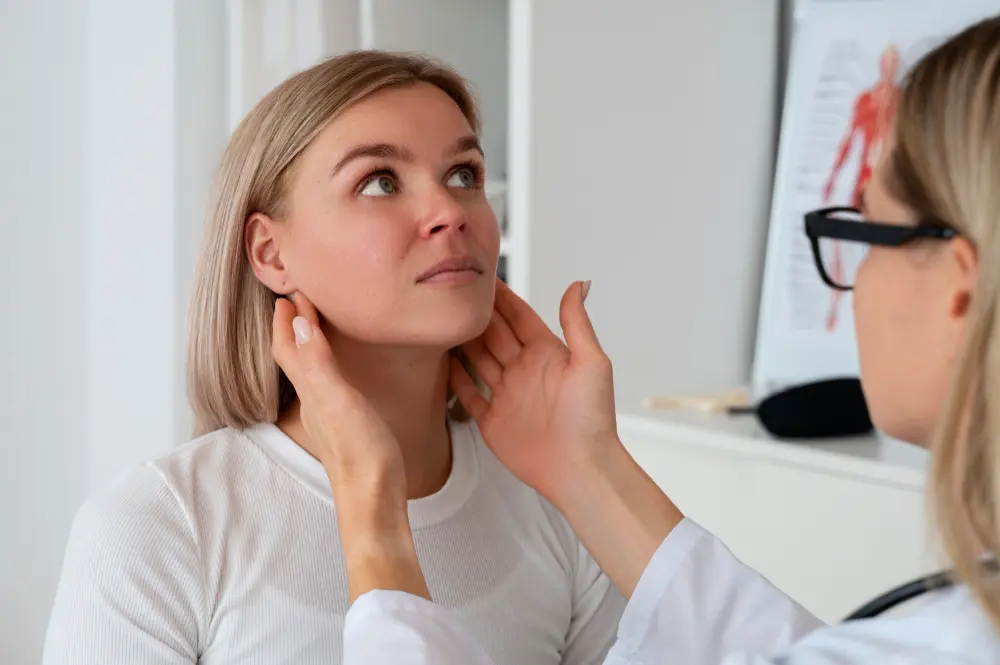
Every Patient Is Unique
Every thyroid nodule is different. The most appropriate treatment approach should be determined through an evaluation by a specialist and a personalized treatment plan.
What Is a Thyroid Nodule?
GUATR
THYROID NODULE

HYPOTHYROIDISM
HYPERTHYROIDISM
Treatment methods are divided into two categories: surgical and non-surgical. The appropriate method must be determined by taking into account the individual’s medical history and age.
Non-Surgical Treatment of Thyroid Nodules
Thyroid ablation first emerged in Korea in 2007 and is now performed in various countries around the world. Our country (Turkey) is among the world’s leading countries in thyroid ablation and has physicians who are well-trained in this field. To benefit from the expertise of our physicians and learn about thyroid ablation, training programs are organized almost every month for physicians from abroad (from countries such as Italy, Spain, Thailand, Egypt, Israel, etc.).
- The prevalence of thyroid nodules in the general population ranges from 30% to 40%.
- Approximately 5% of this group has a malignant thyroid nodule.
What Is Thyroid Ablation?
Thyroid ablation is the controlled destruction of diseased tissue using heat, performed by inserting a fine needle into the nodule under ultrasound guidance.
The main methods used:
- Radiofrequency Ablation (RFA)
- Microwave Ablation (MWA)
During the transaction:
- No incision is made
- General anaesthesia is not required
- The thyroid gland is not removed
- Only the nodule is treated
For this reason, ablation is regarded as a minimally invasive, organ-preserving treatment.
Watch our Thyroid Ablation Information Video

This post has been prepared in accordance with the Regulation on Promotion and Information Activities in Health Services, published in the Official Gazette on 12 November 2025. The information contained in this post is for general information purposes only and does not constitute medical advice or a recommendation for treatment. The outcomes of all medical procedures, including surgical and interventional procedures, may vary from person to person. Please consult your doctor for diagnosis and treatment.
Frequently Asked Questions
Everything You Need to Know About Thyroid Ablation
The thyroid ablation procedure involves inserting a special needle into the nodule under ultrasound guidance and ablating it.
Yes. Parathyroid adenomas disrupt calcium metabolism and lead to bone loss. Since isolated surgical removal is not possible, the entire thyroid gland is removed, and the patient must take medication for the rest of their life. With ablation, on the other hand, the parathyroid adenomas are ablated in a 10-minute procedure without the need for such a measure, and the patient’s calcium levels return to normal after a certain period of time.
No. The patient is admitted on the same day and discharged on the same day, immediately after the procedure.
To ensure that patients do not feel any pain, the area is numbed with a local anesthetic before the procedure, and patients remain conscious during the procedure. If necessary, sedatives can be administered through the intravenous line established before the procedure. No severe pain is expected after the procedure; if necessary, patients are advised to take oral (by mouth) pain relievers.
Since the procedure is performed with a needle, the area is simply covered with a small bandage immediately afterward, and no marks remain.
The goal of the procedure is to destroy the unwanted tissue by burning it. Over time, the body’s immune system breaks down the destroyed tissue. After one year, the target reduction rate is 80% to 90%.
This varies from patient to patient and takes between 10 and 30 minutes.
Yes. The ablation procedure does not preclude surgery.
While every procedure carries its own risks, the ablation procedure also involves some risks, albeit very minor ones. However, to date, hoarseness has occurred in only 1% of patients who have undergone the ablation procedure, and it resolved within 3 months.
Patients are usually able to return to their normal lives the next day, though in rare cases, one day of rest is required.
The procedure is usually performed only once, but in rare cases, it may be necessary to repeat it at a later time if deemed necessary.
